Comedy or Suspense: Two Uses of the Same Pause
Comedy or suspense can turn the same held beat into opposite pleasures. See how framing, sound, and audience expectations shift a pause from dread to laughter.
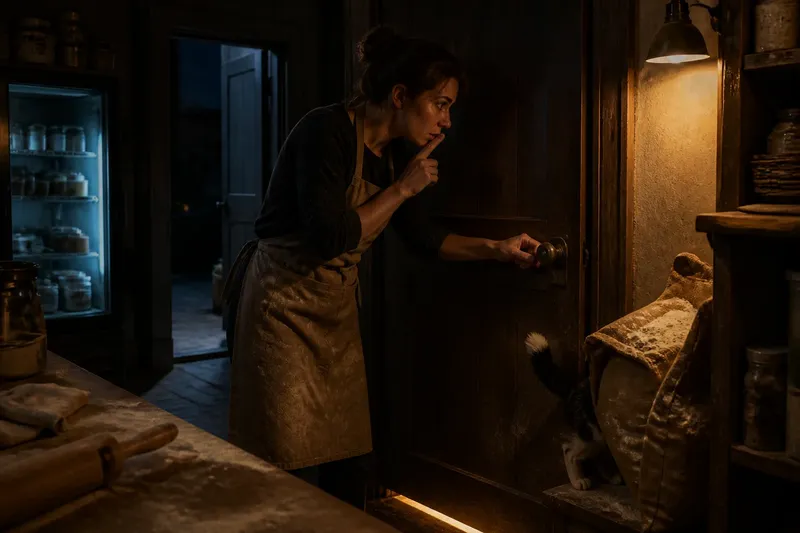
Comedy or suspense can hinge on the same small event: a hand reaches for a doorknob, then stops. In one film, the held beat may make you brace for danger; in another, it may make you laugh before the door even opens. The pause itself has no fixed meaning. What surrounds it tells the audience how to feel.
To see how that change works, follow one invented situation through two versions. A baker named Mara is alone in her shop after closing. She hears three taps from the storage-room door. She walks over, reaches for the handle, and waits. The action stays nearly identical; the genre changes the audience’s expectations, the details placed in the frame, and the timing of the release.
The pause begins with a promise
Imagine the suspense version first. The shop is quiet except for a refrigerator motor that falters and resumes. Mara has just noticed that the back entrance is ajar. The camera holds her hand near the handle, but it also keeps the dark gap under the storage-room door in view. Nothing confirms what made the taps.
This pause works because the scene has made the door feel consequential. The audience is not simply waiting for Mara to act; it is trying to anticipate what her action might reveal. The uncertain sound, the open entrance, and the shadowed space all point toward possible danger without settling on one explanation.
Suspense often draws its force from that narrow gap between a clear question and an unknown answer. Here, the question is immediate: what is behind the door? A pause lets the viewer imagine possibilities, while the composition gives those possibilities somewhere to gather. The longer Mara hesitates, the more attention shifts to tiny cues: her tightening grip, the dim corridor, the refrigerator’s uneven hum.
Duration matters, but it is not a stopwatch trick. A pause can feel long because the viewer is alert to what may happen next. If the scene has not supplied a reason to care about the door, holding on the handle may feel empty. Anticipation needs a threat, a risk, or at least a meaningful uncertainty.
The same beat turns comic through context
Now imagine a comic version of Mara’s shop. The taps come from a tray that has slipped inside a cupboard, and the audience has already seen a flour-covered cat squeeze into the storage room. Mara, however, has not seen it. She approaches the door with exaggerated caution, holding a rolling pin like a sword.
She reaches for the handle and freezes. The refrigerator gives a loud, oddly timed click. Mara jumps and drops the rolling pin onto her own foot. She tries to stay dignified, then hops in place while pretending nothing hurts. The pause still delays the door opening, but now the audience has clues that make Mara’s serious interpretation look comically out of proportion.
Comedy often lives in the difference between what a character expects and what the scene lets the audience recognize. The viewer sees the cat’s escape route, or knows that the taps came from an ordinary accident, while Mara builds a grand danger out of scraps of evidence. Her pause stretches that mismatch. We wait not only to learn what is behind the door, but to watch her commit to a mistaken idea.
The release matters, too. A sudden, harmless reveal can puncture the tension; a character’s clumsy reaction can extend the laugh. The timing gives the audience room to notice the mismatch, then delivers a change in expectation. If the cat simply appears without a setup, the moment may surprise but not land as strongly as a reveal that reorders details already seen.
Framing and sound steer the audience
The camera can guide a pause without explaining it. In the suspense version, a tight view of Mara’s fingers may make the handle feel like a point of no return. A wider frame that includes the dark doorway can keep the possible threat in the viewer’s peripheral attention. A slow move closer can feel like pressure, especially if the scene has left room for the audience to scan the shadows.
For comedy, a wider composition may reveal the cat’s tail disappearing behind a sack of flour while Mara remains unaware. That extra information gives viewers a private advantage. A locked-off shot can also let a small physical detail become funny: the rolling pin slips, Mara catches it, and then her attempt to look brave becomes the joke.
Sound changes the texture of the wait. A low, sustained tone can make silence feel charged, while an abrupt click can turn a tiny movement into a jolt. In comedy, a conspicuous silence followed by a squeak, clatter, or badly timed interruption can expose the character’s overconfidence. These are possibilities, not rules: a quiet comic scene can depend on an expressive face, and suspense can use ordinary room tone rather than ominous music.
Editing shapes the beat as well. Cutting away from the handle to an unexplained shadow may multiply possibilities. Staying on Mara’s increasingly strained expression can make the moment funny if her seriousness is visibly at odds with the harmless clues. Either choice changes what the audience watches for.
Small choices change the pause’s meaning
Return to the invented scene and change one element at a time. If the cat is hidden from the audience, the comic version loses its dramatic irony: viewers share Mara’s uncertainty, so the moment may lean toward suspense. If a cheerful tune plays while the storage-room door rattles, the scene might invite comedy, but only if other details support that reading. Music cannot automatically erase the threat suggested by an open entrance and a dark room.
Now change Mara’s behavior. A character who calmly checks the handle may leave the audience focused on the unseen cause. A character who whispers a brave speech to herself, then flinches at a harmless click, gives the pause a comic shape. Performance supplies its own timing: a glance held too long, a swallowed word, or a careful attempt to conceal fear can redirect the beat.
Say you are sketching a short scene in which a delivery driver hears a knock from an empty hallway. To make the pause suspenseful, you might show the driver’s phone losing its signal and keep the hallway partly obscured, then hold on the hand hovering near the door. To make it comic, you might let the audience see that a rolling cart is nudging the wall while the driver invents an elaborate story about a visitor; the held beat then invites us to anticipate the mismatch. In either version, the concrete setup earns the delay.
What makes a pause funny or suspenseful?
Does a longer pause always build more suspense?
No. A pause builds anticipation when the audience has a reason to expect a meaningful change. If the scene repeats the same image without adding pressure, the delay can become slack rather than tense.
Can a pause be funny if the audience does not know the answer?
Yes, if the humor comes from a character’s behavior, an awkward silence, or a collision between tone and circumstance. The audience need not know what is behind the door, but it does need a comic cue that shapes the wait.
Can music make a scene switch genres?
Music can influence a viewer’s expectations, but it works alongside framing, performance, editing, and the situation itself. A playful cue over a genuinely threatening image may create unease rather than laughter, or a deliberately strange contrast between the two.
How can you tell what a pause is asking you to feel?
Notice what information the scene gives you and what it withholds. Ask whether you are watching for a danger to appear, a misunderstanding to unravel, or a character to expose a weakness; that expectation often identifies the pause’s main effect.
The reveal pays off what the pause prepared
In the suspense version, Mara opens the door and finds only the fallen tray. The release may bring relief, though the open back entrance leaves a trace of unease. In the comedy version, the cat strolls out, steps on the rolling pin, and sends it rolling into Mara’s other foot. The reveal lands because the scene has prepared the audience to enjoy her overreaction, not merely to identify the source of the taps.
That is the useful distinction: suspense makes the wait feel loaded with possible consequences, while comedy makes it fertile ground for a mismatch, a reversal, or a character’s revealing response. The same hand can hover over the same handle, yet the viewer’s attention is aimed elsewhere.
When a film holds on a small gesture, notice what it has already taught you to expect. The pause’s length is only one ingredient; its surrounding clues decide whether you lean forward in worry or hold back a laugh. That is why comedy or suspense can use the same beat without asking the audience to experience it the same way.