Why a Mystery Film Delays the Answer
Why a mystery film delays the answer shapes every clue and suspicion, helping you track what the audience knows and stay actively involved.
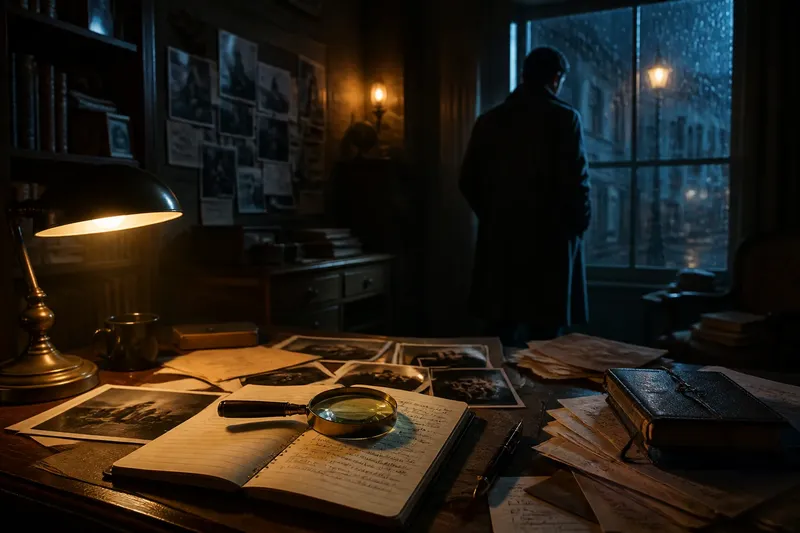
Why does a mystery film make you wait for the answer when the detective already seems close? The delay is not empty time: it controls what you can know, invites you to interpret what you see, and makes each new detail alter the story in your mind.
Watch the gap between evidence and explanation. These six choices show how a film can turn withheld information into an active viewing experience without simply hiding the solution.
1. The film gives you a question before it gives you a map
A mystery often opens with a body, a missing object, a lie, or a troubling absence. The event is clear enough to create a question, but the relationships around it remain uncertain. You may know what happened in broad terms while knowing little about who had a reason to make it happen.
That imbalance gives the audience a job. A locked room, a broken glass, or a character who refuses to name someone becomes a possible lead because you have not yet learned which details matter. The film establishes a field of attention, not a solution.
Notice how much the opening tells you about the rules of looking. A close view of a key suggests that access may matter. A long pause before a witness answers may make speech itself feel like evidence. Neither detail settles the case, but each teaches you where to direct your attention.
2. A clue changes meaning when the film changes its context
A clue is not always a piece of information with one fixed meaning. Its force depends on what you already believe. A muddy footprint might suggest an intruder, then later point toward a resident who claimed not to leave the house. The physical trace stays the same; your explanation changes.
This is why a mystery can show you evidence early and still delay the answer. The film has given you an object, gesture, or fact, but not the context needed to read it accurately. A clue becomes more useful when it connects to another scene or contradicts a confident statement.
As you watch, separate observation from interpretation. “The window is open” is an observation. “The killer came through it” is an interpretation. Keeping those thoughts apart makes the viewing more active: later information can revise your theory without making the earlier image disappear.
3. The audience may know less, more, or something different
Not every mystery keeps viewers and characters equally uninformed. In one scene, you may share the investigator’s uncertainty. In another, the camera may show a detail the investigator misses. A third possibility is dramatic irony: you know a character is concealing something, but you do not know why.
Each arrangement produces a different kind of attention. If you know less than the detective, you watch for explanations. If you know more, you watch for consequences. If you and the detective possess different pieces, you compare them, trying to see what the character has not yet connected.
The film can shift this balance from scene to scene. A private conversation may reveal that two suspects are coordinating their stories, while a later interview leaves you as puzzled as the investigator. These shifts keep uncertainty specific. You are not merely waiting for the answer; you are tracking who has access to which part of it.
4. A reveal needs to reorganize what came before
A satisfying reveal does more than supply a name. It gives earlier details a sharper relationship. The remark that sounded casual becomes a warning; the apparently irrelevant appointment becomes a timeline clue. You can look back at the film’s evidence and see why the answer fits.
That does not mean every mystery must be solvable before the reveal. A film may keep the decisive fact offscreen or let a character discover it privately. But the answer feels connected when it resolves the central uncertainty and accounts for important clues rather than appearing as a new fact from nowhere.
Pay attention to the scene’s shape. A confession, an explanation, and a physical demonstration can all reveal the same truth, but they ask you to respond differently. An explanation invites you to compare claims with the evidence; a demonstration lets the action itself settle a question. The best choice depends on what the film has taught you to notice.
5. Say you suspect the wrong person for a good reason
Imagine a mystery in which a curator says she never entered a gallery after closing, while a damp sleeve and a fresh smear of paint suggest someone handled a recently cleaned frame. You might suspect her because the details seem to converge. Later, the film shows that she was carrying a rain-soaked coat for a colleague and had touched the frame earlier in the day.
That invented situation makes the timing of information visible. The clues were present, but the first account lacked the details that explained them. Once those details arrive, your suspicion can change while the original observations remain intact. The film has not erased your reasoning; it has given you a better basis for it.
When a mystery redirects your attention, ask whether the new information clarifies an earlier clue or simply replaces it. A reversal is more engaging when it changes the meaning of what you saw. If it asks you to forget a detail that the film emphasized, the delay may feel arbitrary instead of inviting.
6. The final answer is not the only question that can remain
A mystery can resolve who committed an act while leaving other matters unsettled. The motive may remain contested, a witness may have lied for a separate reason, or the investigator may face a choice about what to do with the truth. Such open edges do not necessarily weaken the solution; they can shift the film from “Who did it?” to “What follows from knowing?”
Look at what the ending closes and what it leaves active. If the central evidence points to a culprit and the film makes the chain of reasoning legible, an unresolved moral choice can feel deliberate. If the culprit’s identity itself remains unclear, the ending may be asking you to keep weighing competing accounts.
These distinctions help you judge a mystery on its own terms. An ending need not answer every question, but the film should give you a sense of which question it has answered and which one it has chosen to leave in your hands.
What should you watch for as the answer is delayed?
How can I tell whether a detail is a clue?
Treat a detail as a candidate clue when the film gives it unusual attention, connects it to a character’s account, or returns to it later. Keep the observation separate from your theory until another scene supports or complicates the connection.
Why does a mystery show evidence before explaining it?
Early evidence lets you form a theory and gives later scenes something to revise. A detail can be visible without being understandable because its context, source, or significance has not yet been revealed.
What is the difference between surprise and suspense?
Surprise changes what you know in a sudden moment; suspense makes you wait while uncertainty or danger continues. A mystery can use both, but a reveal has more weight when the earlier delay shaped your expectations.
Does a good mystery have to let viewers solve it first?
No. Some invite deduction, while others focus on the investigator’s process, a hidden motive, or the cost of uncovering the truth. The useful question is whether the film’s information choices support the kind of attention it asks from you.
Next time you watch a mystery, track not only the clues but the moment each clue becomes readable. That timing is often where the film’s real conversation with you takes place: it offers a fact, waits for your interpretation, then decides when to let the fact speak clearly.